Featured Post

Vititec clone information 2024

Thursday, September 30, 2010

Chardonnay


- Identification / Origin: Champagne and Burgundy: it is the only grape grown in the Chablis appellation

- Synonyms: wrongly called pinot blanc because it is not a white pinot noir, beaunois in Yonne, aubaine in Saône and Loire, auvernat in the region of Orléans, chaudenay in Touraine, melon Arbois, gamay blanc in the Jura, petite Sainte Marie in Savoie.


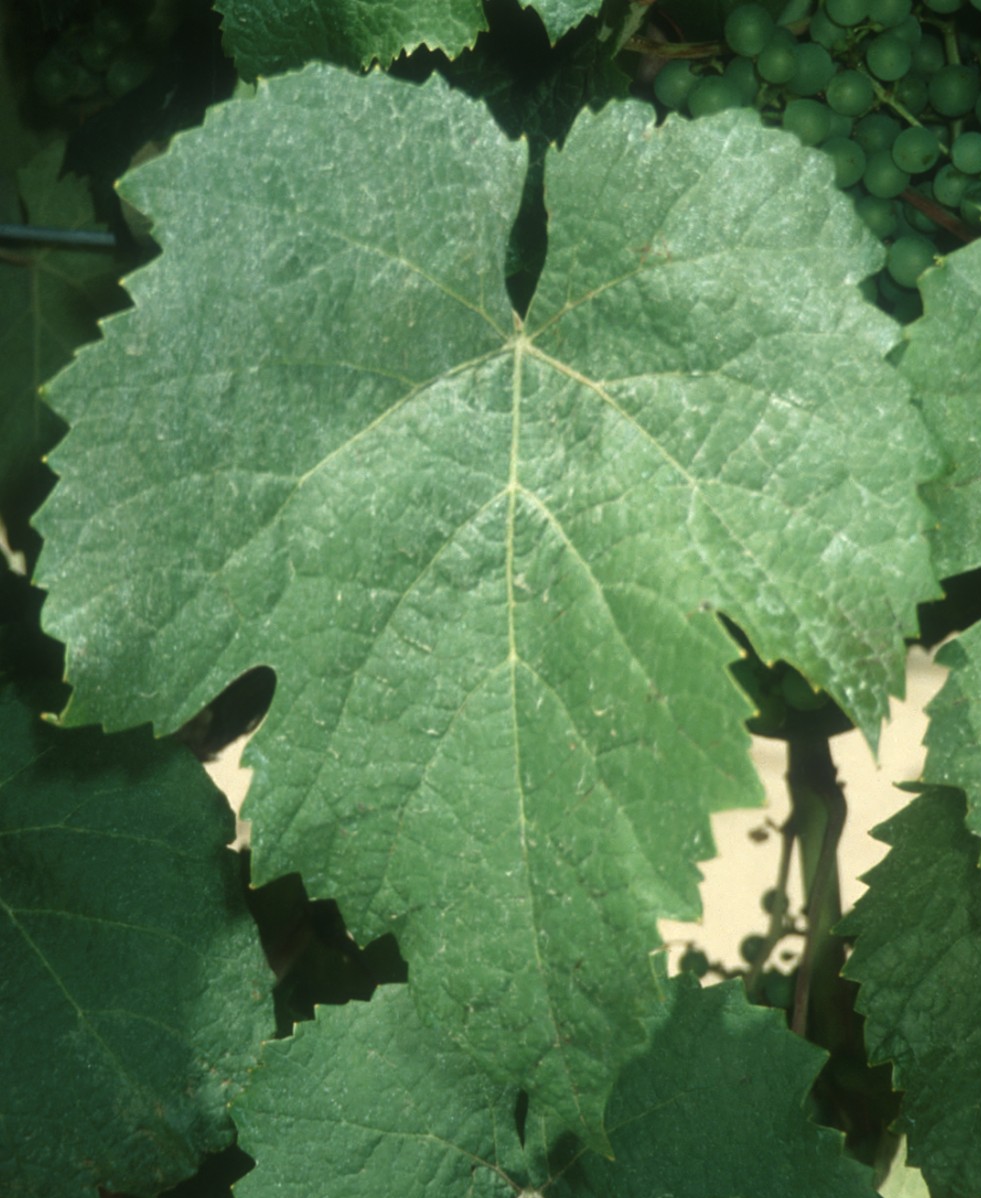
Description: small to medium clusters, cylindrical, compact sometimes with two wings; berries spherical or sometimes slightly oblong, yellow amber in the sun, thin skins thin enough to break when approaching maturity.

Production ability: bud early, susceptible to spring frosts. Fairly strong vigor, very productive depending on the clone. Moderately susceptible to mildew, it is little affected by mildew and especially by grey rot. Sensible also to rain and low temperatures during flowering which can lead to partial or total coulure and millerandage in some cases. Maturity late1st period.

Clones approved: preference, in descending order, 76, 95, 75, 96, 548, 277, 121, 124, 125, 122 and 78.
Note that the clone 77 has a slight muscat taste.

Type of wine / Aromas: is part of the vine designations Champagne, virtually all white appellations of Burgundy, Saumur, Orleans, Touraine, Vins du haut Poitou, Vins du Thouarsais.
With reasonable production, gives a wine of great finesse with a high aromatic potential.
Chardonnay should be harvested early enough to get a high quality product and we will monitor particularly the sugar/ acidity balance.

Aromas of acacia, almonds, toasted almond, almond green, amber, hawthorn, banana, fresh butter, brioche, orange, freshly cut hay, fern (lightweight), dried fruits, fresh grass, lilac, lilies, mango, brown glossy, mint green, crumb of bread, honey, mousseron, blackberry, hazelnut, toasted hazelnut, notes buttered, the core fishing , Orange, nettle white bread buttered, toasted bread, grapefruit, papaya, almond paste, white peach, rose petal, stone rifle, pear, pepper, apple, licorice, flint, wood, elderberry, blond tobacco , Linden, toast, truffle, vanilla, verbena, purple, ... . .

Monday, January 18, 2010

101-14 Mgt

E. Archer

Oorsprong: Kruising tussen V. riparia en V. rupestris deur professor Millardet in samewerking met die markies de Grasset (Millardet = M; de Grasset = gt: Mgt).

Spruitpunt: Geslote; bootvormig; bleek groen; steunblare lank en kleurloos

Jong blare: Lig tot gelerig groen; effe koperkleurig; geplooi; effe donserig behaard op die nerwe aan die onderkant van die blaar.

Volwasse blare: Wigvormig; riparia-agtig; neig na drie-lobbig; terminale tande van die hoofnerwe is lank; oppervlakte effe geplooi tot gegolf; borselhare aan die onderkant op die hoofnerwe; liggroenerig gekleur; bladsteelsinus baie oop U-vormig; bladstele ligrooi gekleur en naak tot effe borselharig.

Blomme: Morfologies hermafrodiet, fisiologies vroulik; gee oorsprong aan klein, swart trossies met klein ronde korrels; pitte het byna geen nekkies nie.

Somerlote: Fyn geriffeld; naak; persrooi; kort internodiums; relatiewe vroeë blaarval.

Winterlote: Fyn geriffeld; fyn borselhare op nodiums; ligvaal tot donker vaal met opvallend lig strooikleurige vaatbondelriwwe; nodiums nie baie prominent; klein gepunte ogies.

Verbouing: Medium groeiende onderstok met n relatief kort vegetatiewe periode wat gebruik kan word wanneer vroeër rypwording verlang word; goed aangepas op vlakkerige dupleksgronde; lae bestandheid teen aktiewe kalk (9% vry kalk); baie goed bestand teen filloksera; goed bestand teen knopwortelaalwurm; vatbaar vir Phytophthora wortelverrotting; goed tot baie goed natbestand redelik goed droogtebestand; goed brakbestand; goeie wortelvormingsvermoë; goeie affiniteit word met hittebehandelde materiaal verkry; matige groeikrag word in die bo-cultivars geinduseer.

Friday, January 15, 2010

Petit Verdot

PARADOXICAL CULTIVAR PAR EXCELLENCE!
Professor Alain CARBONNEAU
Agro.M, Institut des Hautes Etudes de la Vigne et du Vin,
Building 28 / 2 place Pierre Viala, F-34060 Montpellier cedex 1
Tel (+33) (0) 4 99 61 23 60 I Fax (+33) (0) 4 99 61 30 43 / e-mail: carbonne@supagro.inra.fr


Petit Verdot is a grape variety of which is spoken more and more global. Its success is justified by the typical and exceptional quality of its wines. Here, through testimonials, is the experience that I could acquire.
The discovery (1970 - 1980)
Like many, I discovered Petit Verdot in the Médoc thanks to the local winemakers. In the years 1970 - 1980, Petit Verdot was considered as marginal cultivar, occasionally complementing Cabernet Sauvignon, when added to re-balance the acidity in major subassemblies for long aging, while respecting the typical dominant major cultivars like Cabernet Sauvignon / Merlot in which the first partner had precedence. The growers insisted that this cultivar was true to its name, reflecting its particularity to give small acidic berries with uncertain maturity.
However, some wine experts, like Marcel Ducasse at the Chateau Lagrange in St. Julien, reasoned that Petit Verdot deserved better than 2 to 3% of a blend in certain vintages, they were convinced the wine of this variety brought many more qualities than adjusting the pH meter! Thus, the percentage of Petit Verdot was raised, sometimes up to 15% in some blends. Similarly, Petit Verdot, leaving his status of a marginal cultivar, was planted in soil themselves not marginal, and suddenly we realized that this variety could ripen regularly, so that usually at the Chateau Lagrange it is harvested before the Cabernet Sauvignon. This consideration of Petit Verdot as a full-fledge cultivar, even if it was considered as and addition to major cultivars, has grown, for example, when we developed an experimental lyre vineyard in the Mouton Rothschild Pauillac area, Petit Verdot was chosen with Cabernet Sauvignon, and the sensory analysis of the tank Petit Verdot - Lyre were particularly revealing.
Renewed (1980 - 1990)
Agricultural Progress and Wine, 2009, 126, No. 22The renewed interest in this variety grew stronger with the increasing frequency of easier maturing years, a phenomenon which had its origin in the 1980s after a series of difficult years in the 1970s, and it established permanently in the 1990s, this last vintage which probably marked the spirits in that sense. Climate change, now recognized as responsible for these climate series, which are no longer regarded as exceptional, is certainly the cause of the Petit Verdot global response in maturation. So, there is the double issue of increasing the percentage of Petit Verdot in its stronghold of cultural origin, and her adaptation of warmer climates than the Medoc or Bordeaux in general and in particular adaptation to Mediterranean vineyards.
The rest of this study had been anticipated by some winemakers - the pioneers, especially in California. The second experience I had with Petit Verdot was in 1980 in the Sonoma Valley at Simi Winery with Zelma Long. I discovered on this occasion that this variety was capable of producing a very rich wine all by itself and that it required special monitoring in the vineyard because of its greater sensitivity to drought than Cabernet Sauvignon. A few years later, in Adelaide, at a conference organized by Australian wine industry, I witnessed the attention to the words of Denis Dubourdieu extolling the merits of Petit Verdot in Bordeaux blends, and the virtues of such a 'French touch' in the typicality of a great wine. In the world of wine quality, as in the large kitchen, many people pay attention to the recipe or the 'je ne sais quoi' responsible for the success. The fact is that even if this event had perhaps a local effect, he enrolled in a course of development of Petit Verdot globally in the years 1990 to 2000.
Globalization (1990 - 2000)
Now that many winemakers tried planting Petit Verdot, it is a qualitative goal of excellence to produce 'crus' or the purpose of diversification of blended wines or the cultivar. I know many successful examples in the world: California, Australia, New Zealand, Argentina, Chile, Peru, Sicily, Spain, Lebanon and even Egypt!
The Languedoc was not far behind. Some growers believed in it and were not disappointed by the quality of wine and there was some normal reluctance as it is a difficult cultivar to trellis or control its fertility (up to 4 small bunches per shoot!), But undoubtedly Petit Verdot has made a major source of diversification in the sense of high quality wines. In this context, I always remember the remark Boubal Denis in 1993 when he answered my question "Should we not really develop the Petit Verdot in Languedoc? >>, Which probably summarizes both the skills of the great variety and the difficulty of promoting a widespread upgrading policy, all colored with a southern humor: "The Petit Verdot? He is too good! ... >>. In Languedoc, I would cite the Nizas domaine in the middle valley of the Herault, supervised by Bernard Portet, who was very successful with this varietal.
Agricultural Progress and Wine, 2009, 126, No. 22In Provence, I salute the courage and dynamism of a Swiss winemaker, Jean-Daniel Schlaepfer, which produces in the region of Les Baux de Provence in his Lauzières domaine, has an exceptional wine based on Petit Verdot, the qualities that I attribute to this vineyard are justified by its pioneer, since he took the double risk in the early 1990s, to planted in this particularly Mediterranean region, Petit Verdot on a Lyre trellising system.
Great wine connoisseurs and advisers have also brought their personal touch. In particular, Michel Rolland in Madrid in 2000, during a conference on wine production of 3 millennium, he called, beside the traditional wines, developing innovation and creativity to the emergence of new wines thus, he had taken as a success story among the many wineries that it is the adviser, a cellar of Castile producing an original blend of 'Shiraz - Petit Verdot'! I can also testify to having been carried out in Languedoc, made by harmonic choice.
You will understand, Petit Verdot is now planted all over the world in vineyards that often has semi-desert climate. It produces great wines, and we regularly praise their exceptional color purple, the finesse of their tannins, their extraordinary range of flavors combining persistent floral notes, spicy notes, and notes of ripe berries. It would be interesting at this stage of analyze the sensory characteristics by terroirs.
Beyond what may be a consensus, namely the great potential of Petit Verdot and its adaptive plasticity, it is still a paradox: how can this be reconciled with the fact that this variety has been finally 're-discovered' recently after a long period where no one recognized its universal qualities? How can such a variety observed closely, is one of the closest that we know to the lambrusques or wild grapes, and stating that it probably was very little selected by man over the centuries' s proves he possess such gifts, although some items such as excess fertility remain to be improved? How is it possible that this cultivar, from the South-West or the piedmont Pyrenean (origin of the first clone No. 400) of France with a very special climate, ‘travel' so well? A paradox that need more explanation.....
AC

Thursday, September 3, 2009

DIE HERKOMS VAN WYNDRUIF CULTIVARS

Prof. CJ Orffer & CP Visser
Prof. CJ Orffer was Professor in Wingerkunde aan die Universiteit van Stellenbosch van 1963 tot 1986. Hy is oorlede in Maart 2008.

Gedurende 1958 -1964 het Prof. Orffer talle wyndruifkruisings gemaak en cultivar status is aan ses daarvan verleen, nl Chenel, Weldra, Roobernet, Therona, Grachen en Nouvelle. Hy het ook talle onderstok kruisings gemaak waarvan die bekendste US 2-1 en US 8-7 is.

Kort voor sy dood het Prof. Orffer Vititec versoek om die ouers van sommige van die kruisings na te gaan aangesien hy ‘n vermoede gehad het dat van die ouers nie korrek aangedui is nie. Hierdie artikel is baseer op ’n skrywe wat Prof. Orffer in Februarie 2008 aan Vititec gerig het nadat hy die uitslae van die DNA ouer analise ontvang het.

Wyndruifcultivars word vegetatief voortgeplant ten einde te verseker dat unieke eienskappe van ‘n cultivar behoue bly. Nuwe cultivars kan slegs deur seksuele reproduksie geskep word, hetsy deur spontane of doelbewuste kruisings.

Met die vrystelling van nuwe cultivars ontstaan daar dikwels twyfel oor die ouers van die cultivar. Tot redelik onlangs is die verwantskap tussen cultivars hoofsaaklik afgelei van blaar morfologie en die oorsprong van druifcultivars het tot heelwat spekulasie aanleiding gegee.
Min nuut geteelde wyndruifcultivars kon verbeter op die sogenaamde edelcultivars soos onder andere Chenin blanc, Sauvignon blanc, Chardonnay, Pinot noir, Cabernet Sauvignon en Shiraz. ‘n Uitsondering was Dr Muller van Thurgau, Switzerland se Riesling x Sylvaner kruising wat in Duitsland die aanplantings van Riesling in ‘n stadium oortref het. Sekere navorsers het dit later betwyfel omdat besonderhede feitlik net met Riesling ooreengestem het en nie met Sylvaner nie. Onlangse DNA analise het egter getoon dat die ouers Riesling en Madeleine Royale is.

Die gebruik van PKR (Polimerasekettingreaksie) en mikro-satelliet merkers het druifcultivar identifikasie en ouer-analise gerevolusioniseer. Bowers en Meredith (1997) het daarin geslaag om die ouers van die klassieke Bordeaux cultivar, Cabernet Sauvignon, te identifiseer.
Daar is bevind dat Cabernet Sauvignon die nageslag is van twee ander Bordeaux cultivars, naamlik Cabernet franc en Sauvignon blanc. Bowers et al (1999) het ook bevind dat Chardonnay en Gamay Noir, sowel as 14 addisionele Franse wyndruifcultivars, die nageslag is van die beroemde Boergondiese cultivar Pinot noir en die feitlik onbekende Gouais Blanc.

Die outeurs het ook getoon dat die beroemde Rhône vallei cultivar, Shiraz, die nageslag is van Dureza van Ardéche en Mondeuse Blanche van Savoy in Suid-oos Frankryk. Dit weerlê die vroeëre beweringe dat Shiraz van midde-oostelike oorsprong is.

Die ouers van baie cultivars sal waarskynlik nooit bepaal kan word nie aangesien die ouers waarskynlik nie meer bestaan nie. Pinot noir byvoorbeeld word beskou as ‘n baie ou cultivar en kon reeds in die eerste eeu bestaan het. Columella beskryf ‘n cultivar in De Re Rustica wat moontlik Pinot noir kon wees (Viala and Vermorel, 1901). Die naam Pinot is vir die eerste maal in die 14de eeu opgeteken. Tot op datum is nog geen ouers vir hierdie ekonomies belangrike cultivar gevind nie.

In Suid-Afrika was die kennis insake die genetika van die druifstok in die verlede baie beperk. By kruisings en hul ouers is veral aandag gegee aan die besonderhede van blare, trosse en wyn. So is by Pinotage vrae gestel oor die geurvolle donker gekleurde wyne, terwyl geeneen van die ouers, naamlik Cinsaut en Pinot noir oor sulke eienskappe beskik nie. Die ouers van Pinotage is in 2007 wel bevestig met PKR analise deur ENTAV(Etablissement National Technique pour l'Amélioration de la Viticulture), Frankryk.

Die plaaslik suksesvolle kruisings, Pinotage, Chenel, Weldra, Therona, Nouvelle en Roobernet is ontwikkel uit kruisingswerk wat in die oopte in wingerde gedoen is en nie onder beheerde toestande in glashuise nie.


Pinotage

Nouvelle
Selfbestuiwing by Vitis vinifera kon geredelik plaasvind terwyl die operateur besig is met die kruisingswerk. Foute kon ook insluip by die insameling van stuifmeel, pitte en etikettering.
Die Departement Wingerd- en Wynkunde van die Universiteit Stellenbosch het nie oor addisionele spesialis personeel beskik wat uitsluitlik gemoeid was met die totstandkoming van kruisings en die evaluering daarvan nie. Kruisingswerk by die Departement Wingerd- en Wynkunde was dus ingepas met ander verpligtinge soos voor- en nagraadse studente onderrig, voorligting aan produsente en wynmakers, navorsings, toesig oor proefplase by byvoorbeeld Elsenburg, Welgevallen, Robertson, Lutzville asook wingerde by Groot Constantia, KWV - SELK (Stellenbosch - Elsenburg Landboukollege) proewe in distrikte van Constantia, Stellenbosch, Paarl, Robertson, Worcester, Montague, Barrydale, Riebeek-Kasteel, Riebeek-Wes en Tulbagh.

Die oogmerk van die Die Departement Wingerd- en Wynkunde was nie genetiese navorsing nie, maar om jaarliks redelike groot populasies van kruising saailinge te vestig met die mikpunt van ongeveer 1000 per jaar. Dit is op kleinskaal deur Prof Orffer in 1949 begin met ‘n twee jaar onderbrekening tydens doktorale studie aan die Universiteit van Kalifornië. Die werk is voorgesit tot sy aftrede aan die einde van 1986.
Finale keuring van saailinge was op streng kriteria gebaseer. So is veral gelet op Botritis- en suurvrot toleransie. Lae opbrengs en swak groeikrag is glad nie geduld nie. Sonbrand toleransie en bestandheid teen wind was ook belangrike aspekte. Wynkwaliteit moes aanvaarbaar wees vir die lae tot medium prysklas.

Uit bogenoemde kriteria moes Pinotage na regte uitgeskakel gewees het uit ‘n verbouings oogpunt. Op Welgevallen is in jare met sterk suidoos uiters lae opbrengste verkry weens die afwaai van lote.

Soos by Pinotage was daar ook twyfel oor die ouers van Therona, Nouvelle en Roobernet. Therona is ‘n kruising van Cape Riesling (Crouchen blanc) en Chenin blanc maar dit is nog nie bevestig met PKR nie. By Nouvelle is die bladsteelsinus betreklik oop wat moontlik op Sémillon kan dui. Aan die ander kant is daar blaar en korrel besonderhede wat wel op Ugni blanc dui. Aanvanklik is gereken dat die ouers van Nouvelle Sémillon en Cape Riesling is. Met PKR is in 2007 deur ENTAV, Frankryk bevestig dat dit wel Cape Riesling en Ugni blanc is.

Roobernet


Pontak


Die ouers van Roobernet is aanvanklik aangedui as Cabernet Sauvignon en Pontak. Daar was egter aanduidings dat Pontak moontlik nie een van die ouers is nie. Weens die gewildheid van die ou Constantia wyne is baie kruisings met Cabernet Sauvignon en Pontak oor etlike jare gemaak. Weens die laer wyngehalte van Alicante Bouschet is dit nooit as kruisingouer gebruik nie.

Na 20 jaar van waarneming het Roobernet die beste van alle gekleurde sap kruisings uitgestaan met produksie en groeikrag wat dikwels die van Cabernet Sauvignon oortref het. Morfologies wys die blare van Roobernet bitter min van Alicante Bouschet en word dit dikwels met Cabernet Sauvignon verwar. Die groot trosse en hoë produksie dui egter op Alicante Bouschet. Die ouers van Roobernet is in 2007 deur ENTAV bevestig as Cabernet Sauvignon en Alicante Bouschet. Stuifmeel van Alicante Bouschet moes dus skelm ingesluip het.

Die beheerde maak van kruisings is redelik nuut. Aanduidings is dat Bouschet in Frankryk die eerste kruisings gedoen het met Aramon en Teinturer (Pontak).
Die ontwikkeling van die klassieke edelcultivars soos in gebruik vandag uit oer oue wilde cultivars is werklik merkwaardig, gesien in die lig van die redelik klein aantal suksesvolle kruisings wat tot op hede kunsmatig deur die mens geskep is.

Die veredeling van die druif is waarskynlik gekoppel aan die ontdekking van wyn. Gedurende die verdelingsproses het die biologie van die druif merkwaardige veranderinge ondergaan om hoër suikergehalte te lewer vir beter gisting en hoër en meer konstante produksie. Deurslaggewend vir die proses was die verandering in korrel- en trosgroottes en die verandering van wilde, eenslagtige plante tot tweeslagtige, verboude plante. Dit is onbekend of die veranderinge oor ‘n lang tydperk deur seksuele kruisings en natuurlike of menslike seleksies of vinnig deur mutasies, seleksies en vegetatiewe voortplanting plaasgevind het (This et al., 2006).

Literatuur

Bowers J.E., Meredith, C.E. (1997):The parentage of a classic wine grape, Cabernet Sauvignon. Nature Genetics. 16: 84 – 87.

Bowers, J.E., Boursiquot, J. M., This, P., Chu, K., Johansson, H., Meredith, C. (1999): Historical Genetics: The Parentage of Chardonnay, Gamay, and Other Wine Grapes of Northeastern France. Science 3 : 285(5433): 1562 – 1565.

This, P., Lacombe, T., Thomas, M. R., (2006): Historical origins and genetic diversity of wine grapes. Trends in Genetics. 22: 511 - 519.

Viala, P. ,V. Vermorel. 1901-1910. Ampélographie, Volumes I — VII, Masson, Paris

1103 PAULSEN


Oorsprong: Kruising tussen V berlandieri var Resseguier no 2 en V rupestris var du Lot deur Paulsen in 1892.
Spruitpunt: Webbig-behaard en rosig-gekleurd; lste internodium webbig-donsig.
Jong blare: Bronsagtig-gekleurd en naak. Volwasse blare: Klein, niervormig, heel, effe gebobbeld, donkergroen, tandpunte is konkaaf, blad is naak bo en onder, nerwe is pers en donsigbehaard, bladsteelsinus oop U-vormig met bladsteelsinusweefsel meestal afwesig.
Blomme: Manlik, steriel, dra geen druiwe nie.
Somerlote: Webbig-behaard apikaal, geriffel, persrooi met pers nodiums effe donsig.
Winterlote: Geriffel, donkerbruin, effe donsig by nodiums, lang internodiums, klein gepunte oë.
Verbouing: Hierdie onderstok beskik oor ‘n besondere groeikrag en aanpasbaarheid op swaar, klei leem gronde met ‘n nat ondergrond. Sy bestandheid teen brak is redelik terwyl kalkbestandheid goed vergelyk met 99 Richter en 110 Richter. Bestandheid teen filloksera is goed maar slegs matig teen aalwurms. Ongelukkig is hierdie onderstok net so gevoelig vir Phytophthora cinnamomi soos 99 Richter. Dit word hoofsaaklik vir droëland-toestande aanbeveel. Beworteling en vatpersentasie tydens enting is goed.

Ruggeri 140


140 RUGGERI

E. Archer

Oorsprong: Kruising tussen V berlandieri var Rességuier no 2 en V rupestris var du Lot deur Ruggeri in die twintigste eeu.

Spruitpunt: Webbig-behaard met rosig-gekleurde rande.

Jong blare: Blink, liggroen, naak, rosa-gekleurde rande.

Volwasse blare: Klein, niervormig, heel, leeragtig dik, geplooi, bokant naak, onder bykans naak met nerwe donsig-behaard, bladsteelaanhegting is rooi terwyl sinus oop liervormig is; tande is medium groot en konveks; bladstele pers en naak; basale blare meestal duidelik gelob soos by 420 A.

Blomme: Manlik, steriel, dra geen druiwe nie.

Somerlote: Geriffel, pers, geringe donsigheid teenwoordig.

Winterlote: Geriffel, donker rooibruin, naak met donsigheid by nodes, lang internodes, klein gepunte oë.

Verbouing: ‘n Sterk-groeiende, geharde onderstok wat met sukses in die droë, kalkryke gronde van Sicilië, Tunisië, Algerie en Marokko, gebruik word. Dit het ‘n goeie bestandheid teen kalk en filloksera terwyl dit redelik gevoelig vir aalwurmbesmetting is. Beworteling en vatpersentasie met bankenting is nie so goed soos by 99 Richter nie, maar grondenting lewer goeie resultate.